
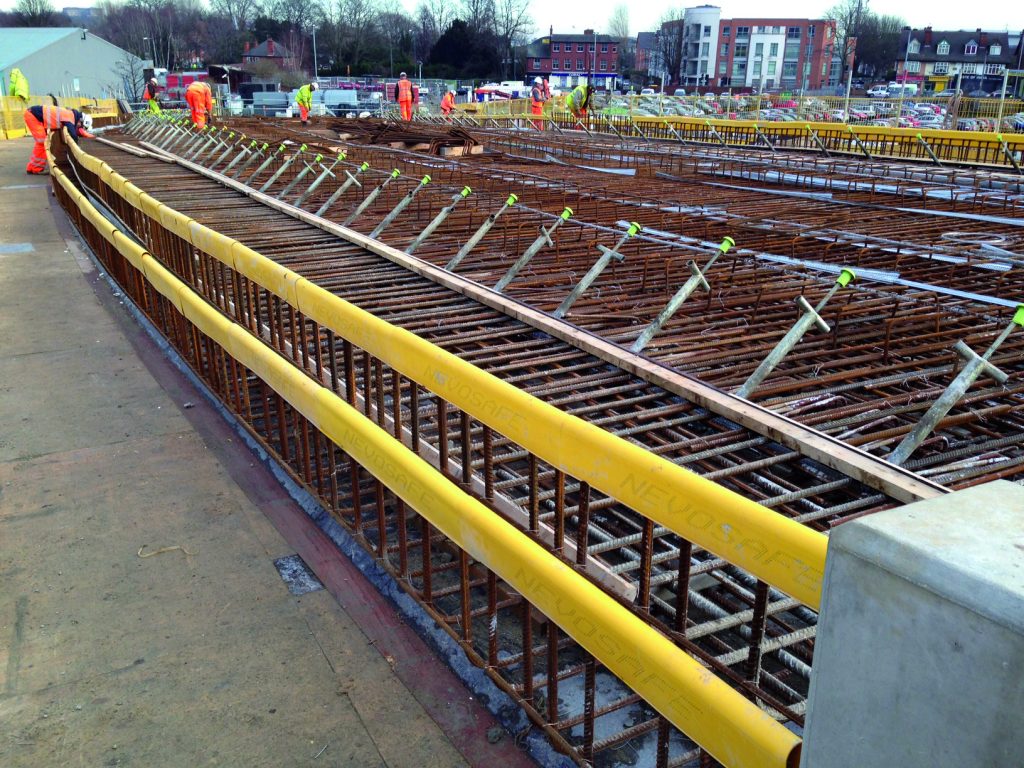
What Are Exposed Steel Reinforcements and Why Are They Hazardous on Construction Sites?
Exposed steel reinforcement refers to the protruding ends of steel bars—commonly called rebar—that extend from concrete structures during construction. These vertical or angled bars are a common sight on building sites, particularly during foundation work, column construction, and slab preparation where they await concrete pouring or connection to additional structural elements.
The hazards associated with exposed rebar create serious construction site hazards that demand immediate attention. Sharp, rigid steel ends can penetrate skin and tissue with minimal force, causing deep puncture wounds that risk infection and internal damage.
Rebar risks manifest in several dangerous scenarios:
- Workers walking backwards or carrying materials may impale themselves on protruding bars
- Falls from elevated positions can result in catastrophic injuries when landing on exposed reinforcement
- Lacerations occur when workers brush against or grab rebar for support
- Eye injuries happen when workers at standing height encounter horizontal rebar at face level
The severity of these incidents ranges from minor cuts requiring first aid to life-threatening puncture wounds affecting vital organs. A fall onto exposed rebar can prove fatal, with documented cases of workers sustaining chest or abdominal penetration injuries.
The importance of safety strip use on exposed steel reinforcement becomes evident when considering accident statistics. Sites without adequate rebar protection consistently report higher injury rates, leading to work stoppages, compensation claims, and potential legal liability. Addressing these risks through proper protective measures transforms a dangerous work environment into one where workers can operate with confidence and security.
How Do Safety Strips Function as Protective Barriers Against Rebar Hazards?
Safety strips create a physical shield between workers and the sharp, rigid ends of protruding rebar by encapsulating these hazardous points within a protective material. These protective barriers are engineered from high-visibility plastic compounds, typically polyethylene or similar durable polymers, designed to withstand the demanding conditions of active construction environments whilst maintaining their protective integrity.
The design of safety strips centres on their ability to cover multiple rebar ends simultaneously through a linear application method. Unlike individual caps that require placement on each separate bar, safety strips feature a continuous channel or groove system that allows them to slide over grouped reinforcement bars in a single action. This channel design accommodates various rebar diameters and spacing configurations, ensuring secure attachment without requiring additional fastening mechanisms.
Material Composition and Protective Properties
The materials selected for safety strip construction serve dual purposes in injury prevention. The outer surface provides a smooth, rounded profile that eliminates the puncture and laceration risks associated with exposed steel ends. The plastic composition offers sufficient flexibility to absorb minor impacts whilst maintaining enough rigidity to stay securely positioned on the rebar throughout construction activities.
High-visibility colours, commonly bright orange or yellow, are integrated into the material itself rather than applied as a coating. This ensures the safety strips remain visible even after extended exposure to construction site conditions, including concrete splatter, dust accumulation, and weather exposure. The visibility factor helps workers identify protected areas and serves as a constant reminder of safety protocols.
Barrier Mechanism and Injury Risk Reduction
Safety strips function by transforming sharp, concentrated points of contact into broad, blunt surfaces that distribute any impact force across a larger area. When a worker accidentally contacts a protected rebar section, the strip’s rounded profile prevents penetration of clothing or skin. The plastic material also provides a degree of cushioning that reduces the severity of impact injuries compared to direct contact with steel.
The linear coverage approach addresses a critical vulnerability in construction site safety: the tendency for workers to focus on individual hazards whilst missing grouped threats. A cluster of exposed rebar ends presents multiple injury points within a confined space, exponentially increasing risk. Safety strips eliminate this multiplied hazard by providing comprehensive coverage across entire sections of exposed reinforcement.
Installation Efficiency and Coverage
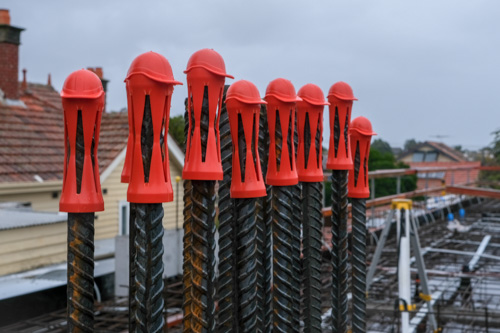
Why Is Nevosafe™ Safety Strip Considered an Effective Solution for Rebar Protection?
Nevosafe™ Safety Strip is a specially designed solution created to tackle the dangers posed by exposed steel reinforcement on construction sites. Unlike traditional individual caps that need to be placed on each protruding bar one by one, this product offers a more efficient way to protect rebar with its innovative design.
Key Feature: Linear Coverage Capability
The main feature that sets Nevosafe Safety Strip apart is its ability to provide protection in a linear manner. This means that a single strip can shield multiple bars at once, forming a continuous protective barrier over grouped rebar arrangements. Instead of requiring workers to fit individual protective devices on each bar end, the strip extends along the length of exposed reinforcement, effectively capping all consistent bars within its reach.
Efficiency Advantages in Installation
The grouped rebar protection approach transforms the installation process from a time-intensive task into a rapid deployment operation. Workers can secure protection across numerous bars in a fraction of the time required for individual cap placement. This efficiency gain becomes particularly valuable on large-scale projects where hundreds or thousands of exposed bars require protection.
The installation method eliminates the repetitive motion of fitting individual caps, which can lead to worker fatigue and potential oversight. A continuous strip application ensures consistent coverage without gaps, reducing the likelihood of missing bars during busy construction phases.
Comprehensive Protection Characteristics
Nevosafe Safety Strip maintains protective coverage even when rebar spacing varies slightly within a grouped arrangement. The flexible yet durable construction adapts to minor variations in bar positioning whilst maintaining secure contact with each protected end. This adaptability ensures that protection remains effective across different rebar configurations commonly encountered on construction sites.
The product’s design accounts for real-world site conditions where perfect alignment may not always exist. Its ability to accommodate these variations whilst maintaining protective integrity distinguishes it from rigid protection systems that require precise positioning to function effectively.
How Do Safety Strips Contribute to Regulatory Compliance and Site Management Practices?
Safety strips directly address mandatory requirements set forth in occupational health and safety regulations across multiple jurisdictions. Construction sites must comply with specific standards that require protective measures for all protruding hazards, including exposed steel reinforcement.
Key Regulatory Requirements for Exposed Rebar
Most occupational health and safety frameworks classify exposed rebar as a “penetration hazard” requiring immediate mitigation. Regulations typically mandate:
- Physical barriers or protective covers on all protruding steel reinforcement exceeding 150mm in height
- Regular inspection protocols to identify and address unprotected rebar
- Documentation of hazard control measures implemented on site
- Training requirements for workers regarding rebar hazards and protective equipment
The importance of safety strip use on exposed steel reinforcement becomes evident when examining enforcement actions. Health and safety inspectors frequently cite construction sites for inadequate rebar protection, resulting in work stoppages, financial penalties, and increased insurance premiums.
Aligning Safety Strips with Legal Obligations
Safety strips provide site managers with a practical compliance tool that satisfies regulatory requirements whilst maintaining operational efficiency. The installation of products like Nevosafe™ Safety Strip creates documented evidence of hazard control measures, which proves invaluable during safety audits and inspections.
Construction safety standards require a hierarchy of controls approach. Safety strips function as an engineering control, which ranks higher in effectiveness than administrative controls or personal protective equipment alone. This classification strengthens a site’s compliance position by demonstrating the implementation of preferred hazard mitigation strategies.
Documentation and Site Management Benefits
Implementing safety strips supports systematic site management practices through:
- Visual compliance indicators: Brightly coloured safety strips provide immediate visual confirmation that hazards have been addressed
- Simplified inspection processes: Site supervisors can quickly verify protection status during routine walkthroughs
- Reduced liability exposure: Documented installation procedures demonstrate due diligence in worker protection
- Streamlined safety reporting: Safety strip deployment can be tracked and reported as a measurable safety metric
Many construction safety standards now require Method Statements and Risk Assessments (RAMS) that specifically address rebar hazards. The inclusion of safety strip installation procedures within these documents demonstrates proactive hazard management and satisfies.
How Corrosion Protection Works with Injury Prevention Measures on Steel Reinforcement
Corrosion protection works alongside physical safety measures to address both immediate and long-term risks on construction sites. Exposed steel reinforcement faces two distinct threats: the immediate danger of worker injury from sharp protrusions and the gradual deterioration caused by environmental exposure.
What happens when exposed rebar corrodes?
Moisture, oxygen, and environmental contaminants attack unprotected steel surfaces, initiating oxidation that weakens the metal. Corroded reinforcement loses its load-bearing capacity, creating structural vulnerabilities that may not become apparent until significant damage has occurred. The rust formation expands the steel volume, causing concrete cracking and spalling that exposes even more surface area to corrosive elements.
How do zinc-rich primers protect steel reinforcement?
Nitoprime Zincrich primer provides a sacrificial coating that shields steel from corrosive agents. The zinc particles in the primer corrode preferentially, protecting the underlying steel substrate through galvanic action. This barrier prevents moisture penetration and oxygen contact, the two essential elements required for rust formation.
The application process creates a durable film that maintains structural integrity throughout the construction phase and beyond. Sites experiencing delays or extended exposure periods benefit particularly from this protective layer, as the primer continues working even when steel remains uncovered for weeks or months.
Why combine corrosion protection with safety strips?
The dual approach addresses different timeframes of risk management. Safety strips provide immediate protection against physical injuries during active construction phases. Corrosion protection safeguards the long-term performance of the reinforced structure.
Consider a scenario where safety strips alone are installed:
- Workers remain protected from puncture injuries during their shifts
- The underlying steel continues corroding beneath the protective caps
- Structural weakness develops unseen over time
- Future maintenance costs increase due to deteriorated reinforcement
Applying corrosion protection before installing safety strips creates a comprehensive defence system. The primer seals the steel surface, whilst the safety strip prevents worker contact with sharp ends. This layered approach ensures both personnel safety and material preservation.
What risks emerge from neglecting either protection method?
Sites that prioritise only physical barriers leave steel vulnerable to environmental degradation. The combination of corrosion protection and injury prevention measures is crucial for maintaining both worker safety and structural integrity on construction sites.
What Benefits Can Be Realised Through The Use Of Safety Strips On Exposed Steel Reinforcement?
Safety strips deliver immediate worker safety benefits by creating a physical barrier between personnel and hazardous rebar ends. The soft, rounded profile of these protective covers eliminates the sharp points that cause lacerations, puncture wounds, and impalement injuries when workers accidentally contact exposed reinforcement.
Direct Impact on Injury Reduction
Construction sites implementing safety strips experience measurable injury reduction across multiple incident categories. Workers moving materials, climbing formwork, or navigating congested areas face significantly lower risks when rebar hazards are neutralised. The protection extends beyond obvious contact scenarios—during trips or falls, the cushioned barrier prevents the catastrophic injuries that occur when body weight meets unprotected steel points.
Key injury prevention outcomes include:
- Elimination of puncture wounds from accidental contact during routine tasks
- Reduced severity of fall-related injuries when workers land near reinforcement
- Prevention of clothing snags that can cause secondary accidents
- Protection for workers at all heights, from ground-level slabs to elevated decks
Economic Advantages Beyond Safety
The financial implications of safety strip implementation extend well beyond injury prevention costs. Sites using these protective measures report fewer work stoppages, reduced insurance claims, and lower compensation expenses. Lost-time injuries from rebar contact can sideline skilled workers for weeks; prevention through simple barrier installation maintains project momentum and workforce availability.
Productivity gains emerge when workers move confidently through areas with exposed reinforcement. The psychological burden of navigating hazardous rebar fields diminishes, allowing personnel to focus on task execution rather than injury avoidance. This efficiency improvement compounds across large projects where hundreds of workers interact with reinforcement daily.
Building a Positive Site Safety Culture
The visible presence of safety strips sends a powerful message about management priorities. When workers observe consistent application of protective measures, they recognise genuine commitment to their wellbeing rather than token compliance efforts. This recognition fosters trust between site leadership and the workforce, creating an environment where safety concerns are raised and addressed proactively.
Cultural shifts manifesting from safety strip adoption:
- Increased worker participation in hazard identification programmes
- Higher reporting rates for near-miss incidents involving reinforcement
- Greater acceptance of other protective equipment and procedures
- Improved morale among workers due to enhanced safety measures

Why Should Safety Strips Be Adopted As A Standard Practice In Construction Projects?
Safety strips must become standard practice because exposed rebar remains one of the most preventable hazards on construction sites. The importance of safety strip use on exposed steel reinforcement extends beyond individual protection—it establishes a foundation for systematic risk management that benefits every project stakeholder.
The Cost of Inaction
Construction sites without proper rebar protection face:
- Increased workers’ compensation claims from puncture wounds and lacerations
- Project delays due to injury-related work stoppages
- Potential legal liability for failing to implement known safety measures
- Damage to company reputation and difficulty attracting skilled labour
These consequences demonstrate that safety strip importance transcends basic compliance. Sites that treat rebar protection as optional rather than essential expose themselves to financial and operational risks that far exceed the minimal investment required for proper safety equipment.
Building a Proactive Safety Framework
Construction site best practices demand that safety measures be implemented before incidents occur. Waiting until after an injury to address exposed rebar contradicts the fundamental principle of hazard prevention. Site managers who integrate safety strips into their standard operating procedures create environments where protection becomes automatic rather than an afterthought.
This proactive approach requires:
- Including safety strips in project budgets from the planning stage
- Training workers on proper installation techniques during site inductions
- Conducting regular inspections to verify coverage of all exposed reinforcement
- Documenting safety strip usage as part of quality assurance protocols
Stakeholder Responsibility
Every party involved in construction projects shares responsibility for worker protection. Developers must allocate adequate resources for safety equipment. Contractors need to enforce installation requirements. Workers themselves should report any unprotected rebar immediately.
The importance of safety strip use on exposed steel reinforcement becomes particularly evident when considering the human element. Behind every potential injury statistic stands a person with family responsibilities and career aspirations. Stakeholders who prioritise comprehensive rebar protection demonstrate genuine commitment to the people who build our infrastructure.
Competitive Advantage Through Safety Excellence
Companies that adopt safety strips as standard practice position themselves advantageously in competitive bidding situations. Clients increasingly evaluate contractors based on safety records and demonstrated commitment to worker welfare. A documented history of implementing construction site best practices, including systematic rebar protection
FAQs (Frequently Asked Questions)
What are exposed steel reinforcements and why are they hazardous on construction sites?
Exposed steel reinforcement, commonly known as rebar, refers to steel bars protruding from concrete structures on construction sites. These exposed ends pose significant hazards such as cuts, punctures, and fall risks, making it essential to address them to ensure worker safety.
How do safety strips function as protective barriers against rebar hazards?
Safety strips are designed using durable materials to cover the sharp protruding ends of rebar effectively. By acting as a protective barrier, they reduce the risk of injuries like cuts and punctures for workers operating around exposed steel reinforcement on site.
Why is Nevosafe™ Safety Strip considered an effective solution for rebar protection?
Nevosafe™ Safety Strip is a specialised product engineered for comprehensive rebar protection. Its unique feature of providing linear coverage over grouped rebars enhances installation efficiency while ensuring thorough protection against injury risks associated with exposed steel reinforcement.
How do safety strips contribute to regulatory compliance and site management practices?
Occupational health and safety regulations mandate measures to mitigate risks from exposed steel reinforcement. Using safety strips aligns with these legal obligations by protecting workers and aiding site managers in maintaining compliance with construction safety standards.
In what ways does corrosion protection complement injury prevention measures on steel reinforcement?
Corrosion poses long-term risks to exposed steel reinforcement by compromising structural integrity. Applying primers like Nitoprime Zincrich prevents rusting, thereby complementing physical injury prevention strategies such as safety strip installation to ensure both durability and worker safety.
What benefits can be realised through the use of safety strips on exposed steel reinforcement?
Implementing safety strips significantly reduces rebar-related injuries, enhancing overall worker safety. Moreover, their use fosters a positive safety culture on construction sites by demonstrating commitment to proactive injury prevention measures.
See more about: How to Choose the Right mesh fencing for Perimeter Security